Showing posts with label Harry Potter. Show all posts

Monday, January 2, 2017

Mental Library: Archetypes

Hello, heroes, mentors, and villains.

Today, we are talking about archetypes.

Archetypes are things that are found throughout literature and mean the same thing (almost) every time you find it. For example, there are archetypal colors (red=danger,etc.), archetypal themes (good v. evil etc.), and archetypal characters (damsel in distress, sidekick, etc.). Also, take note that any of these can be flipped to deliberately mean the opposite of what they're supposed to mean.

Here are some basic ones:

Characters:

Damsel in Distress: The helpless woman who is saved by the man. Sleeping Beauty and Snow White are examples of this.

Hero: The person who goes on a journey. . . which has many specifications. I wrote a post about the archetypal hero's journey here. Example: Harry Potter

Mentor: The person who teaches the hero. Example: Dumbledore

Villain: The person who is against the hero. Example: Darth Vader

Themes:

Light v. Dark: This is self-explanatory. An example of this is in Susan Cooper's The Dark is Rising series.

Coming of Age: This is when a character moves from childhood to adulthood.

So many more archetypes exist, but you'll have to look into them on your own. :)

Happy New Year!

Spruce Nogard
Attributions: 
https://pixabay.com/en/harry-potter-warner-bros-1132332/ 
https://pixabay.com/en/snow-white-princess-prince-933491/
https://pixabay.com/en/star-wars-darth-vader-cult-space-1204193/
http://www.barnesandnoble.com/w/harry-potter-and-the-sorcerers-stone-j-k-rowling/110003632
https://www.amazon.com/Dark-Rising-Susan-Cooper-Cober/dp/B002WXOQ5I/ref=sr_1_8?s=books&ie=UTF8&qid=1480800949&sr=1-8&keywords=the+dark+is+rising


Wednesday, December 28, 2016

Books: Favorites: (Extra Week Post): Uprooted Part Two

Hello, Friends.

Here is the second part two to the book review on Monday. If you have not read it, this post will make no sense. Click here to read it.

One thing I liked was the writing style. The way Novik writes, or the way Agnieszka talks, is a truly beautiful writing style. The word order isn't always the same as we talk normally, but it doesn't make the prose more confusing or awkward. Rather, it enhances the novel.

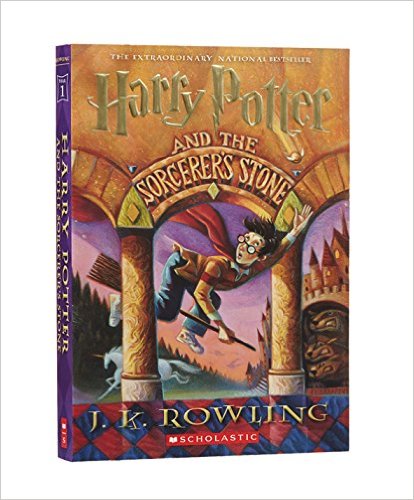
Another thing I liked was the back cover. The cover says a little more than my description, but it ends the way mine does. As I was reading the book, I thought: I have no idea what this book is actually going to be about. I mean this in the way that the back cover doesn't spoil anything. It's not like the back cover of Harry Potter and the Sorcerer's Stone, which basically says: Harry is a wizard, goes to a wizarding school, is famous, and has to protect the school from a mysterious object. The back cover of Uprooted is like if the back cover of Harry Potter went something like this: Harry lives with his horrible aunt and uncle and their son. As the school year approaches, Harry starts receiving mysterious letters, ones which his aunt and uncle are determined not to let him see. After his uncle temporarily moves their family to a run-down shack in the middle of the ocean to try to avoid the letters, a giant man shows up, finally forcing Harry's aunt and uncle to let him read the letter. In it, Harry discovers something wonderful, mysterious, and just a bit magical.

See what I mean? Okay, I know in some cases you would rather have the spoilers on the back cover, but this book is better because you don't know what's going to happen.

One thing I didn't like about Uprooted is it got inappropriate two or three times. While this was irritating, the parts are easy to skip. I would definitely still recommend the book.

The rest of this post is for people WHO HAVE READ Uprooted. If you are still reading this post and you have not read Uprooted, shame on you. Imagine me glaring at you.


Now, for the rest of you who have read the book, continue and enjoy. :)

I also enjoyed the way Novik describes and uses magic. It's a very unique way of looking at magic. On that note, I thoroughly enjoyed the way Agnieszka used her magic. The other thing with that is, although Agnieszka uses magic differently than everyone else, it wasn't the main point of the book. . . I don't know how to say this. It's the opposite of what happens with Alina and her powers in Shadow and Bone by Leigh Bardugo. That's the only way I know how to describe it.


Another thing I liked was the ending. I liked the way they defeated the Wood, and that whole part/message. I'm being very cryptic for the sake of the people who are still reading but have not read the book and therefore should feel extremely guilty.

Of course, I appreciated the allusions to Russian fairy tales. I mean, you must know how much I love fairy tales from this blog. :)

Finally, the book felt like something new, fresh, and original. I mean, yes, you could reduce it to archetypes, but you can reduce anything to archetypes, so that's not what I mean.

On a side note, I must have really missed writing this blog. I wrote 1,122 words for a book review, not including this paragraph. The maximum words for a blog post in order not to overwhelm readers/ get readers to still read your post is 500. Consequently and unfortunately, I'm going to have to split this into two sections. Sigh.

I loved this book, and will continue to love it. This is definitely one I will reread multiple times.

Enjoy your holiday and happy reading, Friends!

Spruce Nogard

Attributions:
https://www.amazon.com/Harry-Potter-Sorcerers-Stone-Rowling/dp/059035342X 
https://www.amazon.com/Uprooted-Naomi-Novik/dp/0804179050 
https://www.amazon.com/Shadow-Grisha-Trilogy-Leigh-Bardugo/dp/1250027438

Monday, August 1, 2016

Mental Library: 1st, 2nd, and 3rd Person

Hello, Friends!

Today, we are learning about 1st, 2nd, and 3rd person, obviously.

Let us start with first person. First person is where the narrator uses "I," "we," etc. This is like the Percy Jackson and the Olympians series. How many of you have read them?


Second person is probably the one you see the least. It is when the narrator uses "you" etc. Pretty much the only books I have read using 2nd person are the Choose Your Own Adventure books. I've read very few of them. I remember my grandparents had one (I can't remember which one it was; maybe The Forbidden Castle?) and I didn't like it very much. I always died in different, horrible ways. Anyways, in Choose Your Own Adventure books, they always say something like: If you decide to go with the hunter, go to page 37. If you decide to continue on your own, turn to page 80. This is second person.

There are two to three-ish types of third person: third person limited, third person omniscient, and third person multiple viewpoint. Let's start with third person limited.

Third person limited is where an outside narrator tells the story, but only knows the thoughts of one character. This is very hard to find. It's kind of like first person, because the narrator only tells you one character's thoughts (so, if the character jumps to a conclusion about someone they are talking to, you don't know whether or not the conclusion is true), but it uses "he/she" instead of "I."

Third person omniscient is where an outside narrator tells the story, but knows, and shares, at his/her discretion, the thoughts of all the characters. Using the earlier example, in this case, the narrator might tell you the conclusion the character jumped to, and then what the actual conclusion is. This is also pretty hard to find.

Third person multiple viewpoint is where an outside narrator tells the story, and uses different viewpoints (who's thoughts we are hearing), at different times. This is most common among third person. Examples of this would be: The Harry Potter series, The Lunar Chronicles, and many more. Also, you could make an argument that third person multiple viewpoint is a subset of third person omniscient.

Okay, this all sounds really complicated, but here's how you can remember the differences between the main three: 1st person uses I, which looks like a 1, 2nd uses you, and 3rd uses he/she.

The differences between the 3rd person ones are:

Limited has two ones in it,
Meaning the thoughts shared with you are from one head.

Omniscient is efficient,
And knows all things, at all times, like a god.

Multiple Viewpoint uses two or more sets of eyes
Meaning you know the thoughts of many characters, but at different times.

I hope you enjoy putting this in your mental library!

Monday, July 18, 2016

Dragons: The Harry Potter Series

Hello, Dragon Lovers!

Now, we are looking at dragons in a different manner. Have you all heard of the Harry Potter series? We'll be looking at how dragons are viewed in it.

The first time dragons are mentioned is in Harry Potter and the Sorcerer's Stone, with the whole Norbert catastrophe. After this, they are mentioned throughout the series. In this series, dragons are viewed as creatures, just like lions, hippos, and the like. They are not "intelligent beings" like humans, elves, etc. This sets them apart from the dragons in The Inheritance Cycle and the dragons in The Enchanted Forest Chronicles.

Now, the regular question of the dragons post: which is your favorite way to view dragons?

Also, are there any other books or movies you can think of that have this view of dragons?


Spruce Nogard

Attributions: 

Saturday, April 30, 2016

Writing: Genre of the Month: Portal Fantasy

Hello, Friends! 

Portal fantasy is this month's genre. Portal fantasy, if you don't know, is fantasy that uses a portal to take you into a parallel world. To learn more, visit Lands Uncharted and read Erin's post “What is Fantasy?” here. Portal Fantasy would include: The Chronicles of Narnia by C.S. Lewis (the portal would be the wardrobe), the Harry Potter series by J.K. Rowling (Platform 9 3/4), The Magic Tree House series (the tree house) by Mary Pope Osborne, and
many more. I love the first three Chronicles of Narnia (in the order they were written), I love the first three to four-ish Harry Potter books, and I absolutely loved The Magic Tree House series when I was little, although I haven't read all of them.

Portal Fantasy is so fun, because it makes you think of things, whole worlds, even, that are lying in wait just around the corner. . . Of things yet to be discovered. . .Of what ifs. . .

What are you reading that's portal fantasy? Do you like portal fantasy? Do you have any good recommendations? Leave comments below!

Spruce Nogard

Attributions: