Showing posts with label Authors. Show all posts

Saturday, August 5, 2017

Fairy Tales: Illustrators

Good Day, Friends!

Today, we are going to talk about fairy tale illustrators. Or, rather, different pictures for the same fairy tale.

Here are all fairy tale books I own. I have included links to the illustrations inside the books because I am not allowed to actually post them on my blog.

1) A Treasury of Children's Literature by


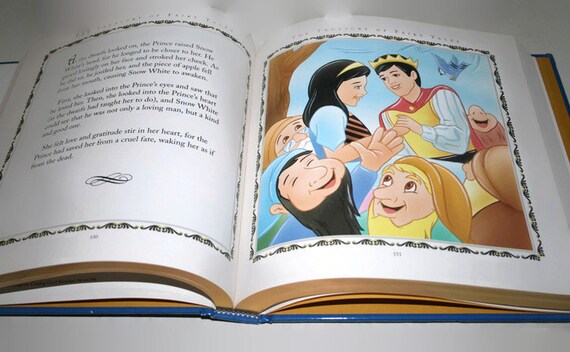
breathtakingly gorgeous illustrations. Here are some of them:


Treasury of Fairy Tales by


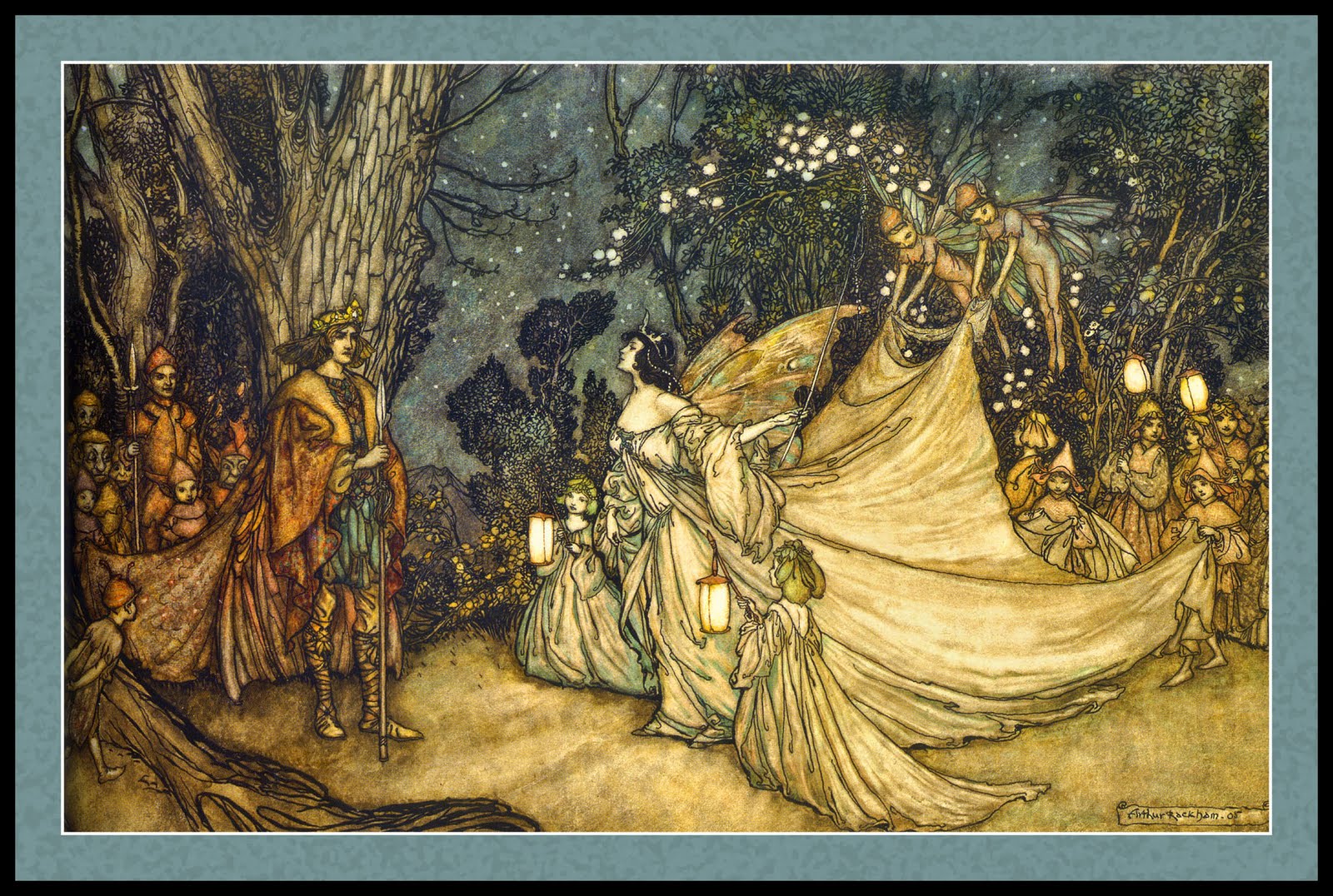
Grimm's Complete Fairy Tales by Jacob and Wilhelm Grimm, Arthur Rackham

This version doesn't have colored pictures, but still Arthur Rackham is an amazing illustrator. He is a very well known fairy tale illustrator, and his pictures possess a sort of magic. It's hard to explain. Here's one of his pictures.


Saturday, July 8, 2017

Fairy Tales: Tropes

Hello, Magical Beings!

I know we've talked about archetypes before, but today we're going to talk about tropes. I've written a few posts about archetypes:

Mental Library: Archetypal Hero Journey

Mental Library: Critical Lenses: Archetypal Lens

Mental Library: Archetypes

These might help you understand tropes a little better.

Tropes are like archetypes, but smaller. This means they only exist in a certain culture's fairy tales, or they are not common enough to be archetypes.

*Disclaimer: I have not studied these matters thoroughly. This information is based solely on what I have read and observed from reading fairy tales.

Some of these include:  

-The three dresses, each more beautiful than the last
These are sometimes described as one being as beautiful as the moon, another being as beautiful as the sun, and the last being as beautiful as the stars. Anyways, girls keep showing up wearing these three dresses, mostly throughout Grimm's fairy tales. (The dresses would be much more beautiful than this one, and ball gowns, but I was having trouble finding pictures.)


-Witches who live in huts with bird feet
This is mostly Baba Yaga in Russian fairy tales.
 
Now imagine bird feet on the bottom.
-Iron shoes
These have appeared in multiple cultures. The wearer usually has to walk until they've worn out all three pairs before they can find what they are trying to find.


-Disobedient wives who suffer as a result
If you've read the post about "The Robber Bridegroom," "Fitcher's Bird," "Bluebeard," and "Mr. Fox," you know what I'm talking about. These wives appear in multiple collections of fairy tales.

What tropes have you noticed in fairy tales?

Spruce Nogard

Attributions:
https://pixabay.com/en/background-page-template-old-1659622/
https://pixabay.com/en/bower-cottage-witch-s-house-2259199/
https://pixabay.com/en/shoes-metal-modern-iron-wear-1982935/
https://pixabay.com/en/castle-ominous-sky-turret-1246628/


Saturday, July 1, 2017

Topic of the Month: Mythical Creatures

Hello, Friends!

This month, look for mythical creatures in the book you're reading. How does the author use mythical creatures? Are they made up, or already established?

What I mean is, in DragonSpell, by Donita K. Paul, Paul creates her own races: Doneels, Emerlindians, Kimens, Mariones, O'rants, Tumanhofers, and Urohms.

Tolkien, on the other hand, created some of his races, but used already established ones as well. Although he created hobbits, he used elves, but still changed the common perception of elves just enough to make them his own.

How do authors you're reading use mythical creatures? Post in the comments!


Spruce Nogard


Monday, June 5, 2017

Mental Library: Lenses: Biographical*

Hello, Friends!

It's good to be back! I'm sorry I've been so behind on posts lately. I do not have a ton of time to write posts due to other circumstances.

Anyways, today we are looking at the Biographical critical lens. The biographical lens is similar to the Historical lens, but instead of looking at how the time period when the book was written affected it, you look at how the author's life affected the work.

I don't have a specific example for today, but you can look at:
  • Events in the author's life
This means tragic events, such as deaths, happy events, such as weddings, etc.
  • The author's views of certain subjects
So, if the author lived during the war, did his/her view of the war accidentally creep into his/her writing? Or was it on purpose?

What books have you read that would be interesting to analyze with the biographical lens?

Spruce Nogard

*Post actually written on June 23rd. See here for details.

Monday, May 29, 2017

Extra Week Post: Fairy Tales from Around the World*

Hello, Collectors!

This is an extra week post. For more information, click here. (The second paragraph under the first picture explains extra week posts.)

Previously, I have mentioned a few fairy tale collectors, as well as multiple fairy tales. Now, however, let's continue by talking about fairy tales from around the world.

1) Russian Fairy Tales

Famous for Baba Yaga, the witch who is known to eat human flesh, but has also been known to help others. . . You may have heard of her hut, the hut on chicken legs. I haven't read very many Russian fairy tales, which is something I hope to change. :) You may have also heard of the tale "Ivan and the Firebird," and multiple fairy tales are similar to their counterparts from other countries. Russian fairy tales are wonderful, beautiful, and have their own set of tropes.

2) Norwegian Fairy Tales

I've talked about "East of the Sun, West of the Moon" before, and sadly, that's pretty much the only one I've read. Peter Christen Asbjørnsen and Jørgen Moe are the two most famous fairy tale collectors of Norwegian fairy tales. As always, I can never have enough fairy tales, so I'll have to start reading Norwegian fairy tales soon. . .

3) Irish Fairy Tales

Irish fairy tales, of course, have the most stories about children getting carried off by fairies. The fairies are a big part of Irish fairy tales, sometimes mischievous, and others more sinister. I know Joseph Jacobs, who collected English fairy tales, also collected some Irish ones, but I'm not sure who else collected Irish fairy tales. I've talked about Irish fairy tales somewhat here, and I included links to Irish fairy tales.

4) Tales of the Arabian Nights

Tales of the Arabian Nights are mostly Middle-Eastern and Indian fairy tales. The main story is the story of Scheherazade, who becomes the wife of the sultan to save other women from suffering the wrath of the Sultan: every night, he marries a new wife, and every morning, he cuts her head off. Scheherazade cleverly asks the sultan if she can tell her son one last story before she dies, but she doesn't tell the whole story. The sultan keeps her alive the next morning so he can hear the rest of the story, then the night after to hear the end of the new tale she's started. . . This continues for 1,001 nights, and this is where the fairy tales come from. It is uncertain which of the tales considered to be from the Tales of the Arabian Nights now were in the original volume, or even if the original volume was complete. Many scholars think multiple authors wrote the Tales because of the variety of styles, traditions, and cultures seen throughout Tales of the Arabian Nights. In any case, these are all wonderful fairy tales, from "Aladdin," to "Ali Baba and the Forty Thieves." 

What fairy tales from around the world do you enjoy?

Spruce Nogard
*Actually posted on June 1st. See here for details.

Attributions:
https://www.amazon.com/Russian-Fairy-Illustrated-Alexander-Afanasyev/dp/1908478683/ref=sr_1_2?s=books&ie=UTF8&qid=1496436188&sr=1-2&keywords=russian+fairy+tales
https://www.amazon.com/dAulaires-Norwegian-Folktales-Ingri-d-Aulaire/dp/0816699321/ref=sr_1_2?s=books&ie=UTF8&qid=1496436381&sr=1-2&keywords=norwegian+fairy+tales
https://www.amazon.com/Celtic-Tales-Enchantment-Scotland-Brittany/dp/145215175X/ref=sr_1_2?s=books&ie=UTF8&qid=1496436559&sr=1-2&keywords=irish+fairy+tales
https://www.amazon.com/Tales-Arabian-Nights-H-Dulcken/dp/089009800X/ref=sr_1_12?s=books&ie=UTF8&qid=1496436754&sr=1-12&keywords=tales+of+the+arabian+nights

Monday, December 5, 2016

Books: Favorites: The Dark is Rising

When the Dark comes rising, six shall turn it back,
Three from the circle, three from the track;
Wood, bronze, iron; water, fire, stone;
Five will return, and one go alone.


Susan Cooper, The Dark is Rising (Pg. 37)

This is the original 1972 edition--we have the 1973 paperback with this same cover. It's very hard to find this version for sale now.

This is one of my favorite books. I haven't read it since I was little, but I'm rereading it, and it's amazing.

It takes place around Christmas time, and the birthday of Will Stanton. Will Stanton is turning 11, and on his birthday, something odd happens. He is suddenly in a different century, but in the same town and with some familiar people. Through this, he discovers he is an Old One, of the Light, a race which fight against the Dark. One of the powers of Old Ones is to travel through Time in a different way than humans can. Will is the last of the Old Ones and is sent on a quest to find the six signs.

Because of traveling through time (kind of), we still get to know Will's family. Susan Cooper does an amazing job of describing the Stantons's Christmas traditions, and capturing the feel of the Christmas season
.

The Dark is Rising is the second book in The Dark is Rising Series, but it reads well as a standalone.

Go read this book!

Spruce Nogard

Source: The Dark is Rising, by Susan Cooper ISBN: 0-689-70420-8