Showing posts with label Brothers Grimm. Show all posts

Saturday, June 30, 2018

On My Mind: Books with Powerful Messages

Hello, Good People!

Before we start, this post is about books with powerful messages, as I'm sure you guessed from the title. :) If you do not like reading summaries of book messages, just go read the books. Skip this post. You'll see what I mean once you're done reading them.

As you know, I love books. I love many books. I love a variety of books. We all do. But today, I want to talk about books with powerful messages. What does that mean?

"Powerful" means compelling, soul-wrenching, making you think, life-changing.

"Messages" are themes, morals, ideas, the author is trying to convey (intentionally or unintentionally.)

Many books have messages of some sort, and most authors are trying to say something through their work, but some books have particularly strong messages. These books stay with us forever, and change us. These books (and movies) help heal us, show us truth, help us believe again. Here are some:

A Tale Dark and Grimm (Also, I reviewed this series here.)
A Tale Dark and Grimm, and the rest of the series, helps heal. There are very few people in the world who actually believe in the power of children, and Adam Gidwitz is one of them. Not many people are willing to believe children and trust that children are often wiser than adults, and not look down on children. Even I struggle to do this. Adam Gidwitz trusts children, believes in them, and listens to them. It's hard to explain.

Also, the way Adam Gidwitz writes makes you gasp with wonder. I can read the A Tale Dark and Grimm series more than once, and find beautiful things. I'm not going to ruin it for you, but read this series more than once, and pay attention. Adam Gidwitz is beautifully gifted, and captures the hurt so well. If you want to know more about this (sorry, I am being rather cryptic :) ) this article and this article are great.

Uprooted (For a full review, click here and here.)
Uprooted is a fairy tale-esque story. The messages in this book are so strong and so powerful, but not overshadowing. I really can't say much without spoiling everything. Just go read it. :) It's about love, though. Not romantic love, which is generally the first thing we think of, but loving others. It's about how sickness in our minds (don't worry--it's not psychological, it's very much fairy tale) makes us and others act differently, out of character. It's about how we are not seeing the person, we are seeing the manifestation of the sickness. Maybe that person chooses to try to get better. Maybe they don't. That is definitely their decision, and they are harming themselves and others if they choose not to get help, but it doesn't mean they aren't suffering, too. They are still sick.

Uprooted teaches you to look past the sickness, to ask: What would this person without this sickness look like? And suddenly you can see them truly, how they were meant to be.

Go read beautiful books, beautiful people.

What books have you read that have strong messages?

Spruce Nogard

Saturday, August 5, 2017

Fairy Tales: Illustrators

Good Day, Friends!

Today, we are going to talk about fairy tale illustrators. Or, rather, different pictures for the same fairy tale.

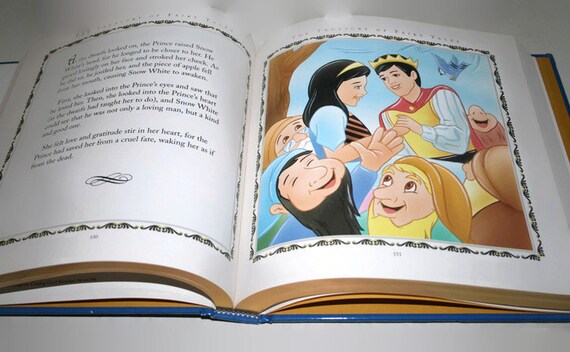
Here are all fairy tale books I own. I have included links to the illustrations inside the books because I am not allowed to actually post them on my blog.

1) A Treasury of Children's Literature by


breathtakingly gorgeous illustrations. Here are some of them:


Treasury of Fairy Tales by


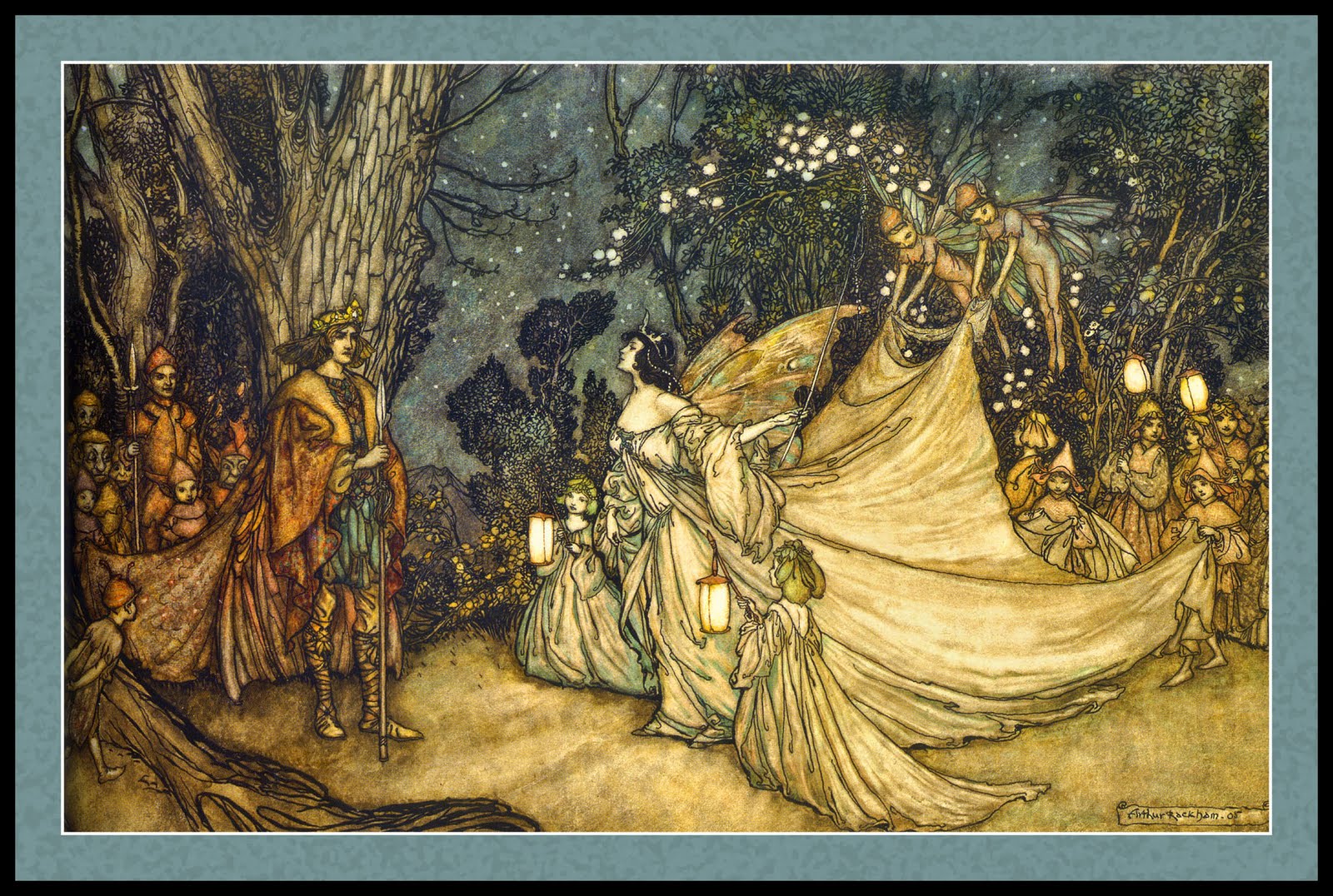
Grimm's Complete Fairy Tales by Jacob and Wilhelm Grimm, Arthur Rackham

This version doesn't have colored pictures, but still Arthur Rackham is an amazing illustrator. He is a very well known fairy tale illustrator, and his pictures possess a sort of magic. It's hard to explain. Here's one of his pictures.


Wednesday, July 19, 2017

Creative Complex: Flowers

Hello, Friends!

This is a guessing game. Which flower goes with which story? (Okay, so sometimes I get bored of just making you do something to do with writing.)

A) Rose
B) Golden Flower
C) Flower

Here are your hints:
  • One is from a fairy tale twist. (But does not appear in the original story.)
  • One you should know right away.
  • Two are from princess stories.
  • One has been transformed into a flower.
  • The previously mentioned one is found in Grimm's fairy tales.
What's your guess? Post in the comments!

Spruce Nogard
Attributions: https://pixabay.com/en/red-rose-rose-rose-bloom-blossom-320892/

Saturday, July 8, 2017

Fairy Tales: Tropes

Hello, Magical Beings!

I know we've talked about archetypes before, but today we're going to talk about tropes. I've written a few posts about archetypes:

Mental Library: Archetypal Hero Journey

Mental Library: Critical Lenses: Archetypal Lens

Mental Library: Archetypes

These might help you understand tropes a little better.

Tropes are like archetypes, but smaller. This means they only exist in a certain culture's fairy tales, or they are not common enough to be archetypes.

*Disclaimer: I have not studied these matters thoroughly. This information is based solely on what I have read and observed from reading fairy tales.

Some of these include:  

-The three dresses, each more beautiful than the last
These are sometimes described as one being as beautiful as the moon, another being as beautiful as the sun, and the last being as beautiful as the stars. Anyways, girls keep showing up wearing these three dresses, mostly throughout Grimm's fairy tales. (The dresses would be much more beautiful than this one, and ball gowns, but I was having trouble finding pictures.)


-Witches who live in huts with bird feet
This is mostly Baba Yaga in Russian fairy tales.
 
Now imagine bird feet on the bottom.
-Iron shoes
These have appeared in multiple cultures. The wearer usually has to walk until they've worn out all three pairs before they can find what they are trying to find.


-Disobedient wives who suffer as a result
If you've read the post about "The Robber Bridegroom," "Fitcher's Bird," "Bluebeard," and "Mr. Fox," you know what I'm talking about. These wives appear in multiple collections of fairy tales.

What tropes have you noticed in fairy tales?

Spruce Nogard

Attributions:
https://pixabay.com/en/background-page-template-old-1659622/
https://pixabay.com/en/bower-cottage-witch-s-house-2259199/
https://pixabay.com/en/shoes-metal-modern-iron-wear-1982935/
https://pixabay.com/en/castle-ominous-sky-turret-1246628/


Wednesday, January 11, 2017

Writing: Creative Complex: Immunity

Hello, Friends.

Today, I have a question for you: What would you do if you were immune to [blank]?

[blank] could be:
  • A disease
  • Heat
  • Cold
  • Weapons
Whatever you can think of!

I'm thinking of the fairy tale "Snow Daughter and Fire Son," but the only version I could find was not the same story at all. In the version I know, snow daughter and fire son want to be near each other, but they can't because they are opposites. I think the brother travels the world to find a way they can be together, and he eventually brings back giant, thick coats that they can wear when they want to see each other. This works, and they live happily ever after.

Spruce Nogard
Attributions: 
https://pixabay.com/en/ice-winter-blue-1125335/ 
https://cdn.pixabay.com/photo/2016/03/31/22/14/castle-1296932_960_720.png 
https://pixabay.com/en/angel-fairy-fire-banner-fantasy-1014564/

Saturday, December 3, 2016

Books: Fairy Tales: Into the Woods

Hello, Friends of the Realm of fairy tales!

Sorry this post is also up late.

Today, I want to talk about Into the Woods. Into the Woods, a musical, combines many fairy tales, including "Cinderella," "Rapunzel," "Jack and the Beanstalk," and "Little Red Riding Hood" by the Brothers Grimm.

The musical twists the fairy tales in different ways, and presents many interesting ideas.

Have you seen Into the Woods? Do you like it? What are your favorite parts? What's an idea in the musical you thought was intriguing?

Spruce Nogard

Sorry about no pictures! Pixabay, the free picture website, is not working.

Saturday, November 5, 2016

Books: Fairytales: What Counts?

Hello, Fairies.

I know we kind of already talked about this in our Difference Between Fairy Tale, Folktale, etc. post, but, what really counts as a fairy tale? We know Grimm's Fairy Tales are fairy tales, but they were originally called Children's and Household Tales. What about poems, like Mother Goose? Do those count as fairy tales? And what about modern-day retellings of fairy tales? They present a wonderful variety of story-telling techniques, and are full of life.

Many of the original fairy tales are full of something amazing, something you can't quite put your finger on, like that elusive smell that you know reminds you of something wonderful from your childhood, but you can never quite remember it, or that story you read for English class you could swear you've read before, but you're quite sure you couldn't have.

For, that is what fairy tales do to you, and the only way you know, unquestionably that a story is a fairy tale, a true fairy tale, is if it makes you believe.

Spruce Nogard

Wednesday, October 19, 2016

Writing: Creative Complex: A Riddling Tale

Hello, Angels.

Sorry--reference to a book. (I'm not telling you which book on purpose. Hee hee. :))

Last week, we started a series of Creative Complexes called the "Family Tree." However, I decided to do this series differently. Instead of having a post in the series every week until it is done, whenever we have a post that falls under the "Family Tree" category, we will add it to that series.

Today, we are solving a riddle. The riddle, actually, comes from a very excellent source. It comes from Grimm's Fairy Tales. It goes like this:

"Three women were transformed into flowers which stood in a field. However, one of them was allowed to be in her own house at night. One time when day was approaching, and she would have to go back to her companions in the field and become a flower again, she said to her husband, "If you will come this morning and pick me, I shall be set free and stay with you from then on."
And that is what happened.
Now the question is, how did her husband recognize her, for the flowers were exactly alike, and without any difference?"

The Creative Complex for today is:
1) Solve the riddle.
2) Make up a story/context for the riddle.

Clarification/Example:
 -The women were transformed into flowers because . . .
-She became free for one night because. . .
-And etcetera!

I know the answer, because I was too impatient to figure it out on my own. If you are like that, I challenge you to be creative, and more patient than I was. :)

Let your imagination run away with you, at least, a little bit!

Post in the comments!

Spruce Nogard

Source: http://www.pitt.edu/~dash/grimm160.html
Attribution: https://pixabay.com/en/mack-flowers-flowers-of-the-field-198240/

Saturday, October 8, 2016

Fairy Tales: Difference Between Fairy Tale, Folktale, Tall Tale, Myth, Fable, and Legend

Hello, Mythical Beings!

Today, I am going to explain the differences between, well, fairy tales, folktales, myths, fables and legends.

This topic is hard to find information on on the internet, so this is kind of iffy. These sound about right to me, but don't base any in-depth essays based on factual evidence on them. :)

Fairy Tales (Google): a children's story about magical and imaginary beings and lands.
Fairy tales are much more than this, though. They weren't all children's tales, as Grimms' Household Tales prove. In order to really know what fairy tales are, you have to read a lot of them. They are full of an indescribable something-something unable to be found in folktales, myths, legends, fables, anything else. Go read them.

Folktales (Google): a story originating in popular culture, typically passed on by word of mouth
Folktales and tall tales are really hard to tell apart. Folktales were originally only spoken, so this is the main difference between folktales and tall tales. Also, they do not have to be overly exaggerated.

Tall Tale (Merriam-Webster): a story that is very difficult to believe, a greatly exaggerated story
An example of this would be Paul Bunyan, or Johnny Appleseed. Paul Bunyan is exaggerated because he wasn't  
actually as enormous as he's made out to be.


Fable (Google): a short story, typically with animals as characters, conveying a moral
This definition, at least, makes sense. An example would be Aesop's Fables (obviously).


Myth (Google): a traditional story, especially one concerning the early history of a people or explaining some natural or social phenomenon, and typically involving supernatural beings or events. 
A myth is usually a story that is religious, or explains something. For example, Greek mythology was actually considered to be true a long, long, time ago (religious). Also, for example, a story that explains something would be like the story of Persephone (look it up), which explains why we have winter as a season.


Legend (Google): a traditional story sometimes popularly regarded as historical but unauthenticated.
This is like the legend of King Arthur. King Arthur could have been real, but no one knows for sure. Also, there are aspects of Arthurian legend that aren't true; for example, Merlin is a wizard, but wizards aren't real.

Now, you may be confused no more over various types of stories!


Spruce Nogard
 Attributions: 
https://www.amazon.com/gp/product/0691173222/ref=pd_sbs_14_img_1?ie=UTF8&psc=1&refRID=17KFX9CXY00DQRBRS5ZR 
https://www.amazon.com/gp/product/1450502954/ref=pd_sbs_14_t_0?ie=UTF8&psc=1&refRID=6AQBS8032QX3FKBHPFSS 
https://www.amazon.com/gp/product/157912867X/ref=pd_sbs_14_t_1?ie=UTF8&psc=1&refRID=RFKDVCSCCR88Y6MPEPCD
https://www.amazon.com/Knights-Leatherbound-Classic-Collection-Leather/dp/1435133463/ref=sr_1_4?s=books&ie=UTF8&qid=1475704728&sr=1-4&keywords=king+arthur+howard+pyle
https://www.amazon.com/Mary-Osborne-American-Tales-Paperback/dp/B00RWQ48EY/ref=sr_1_6?s=books&ie=UTF8&qid=1475704837&sr=1-6&keywords=american+tall+tales

Saturday, August 6, 2016

Books: Fairy Tales: Hans My Hedgehog, or the Compilation of Tales Based on and Similar to the Greek Tale of Cupid and Psyche Part One

Hi, everybody. I should not have let Dragomir name it. I promised him he could, though. Also, sorry this post is late. I got too busy to do it last night. :(

Greetings, Readers,
The purpose of today's plot chart is to engage the minds of our readers and ponder the similarities and dissimilarities of these texts. Prior to us beginning, you must harbor adequate knowledge of the Greek Tale of Cupid and Psyche, or, one of its many similar narratives. 

Dragomir's basically saying you have to know the basic story. If any of you have watched the Disney movie Beauty and the Beast, you should be pretty well off, although there are minor differences throughout the stories.

If you would prefer to acquaint yourself with the original tales, here are the entire texts of each edition.
Hans My Hedgehog (Grimm): http://www.pitt.edu/~dash/grimm108.html
 Jim Henson's "The Storyteller," by Anthony Minghella, seems to give a  moderately dissimilar account. This is taken into consideration in our plot chart.
Cupid and Psyche (Greek Myth): http://www.pitt.edu/~dash/cupid.html
East of the Sun and West of the Moon (Norwegian Fairy Tale): http://www.pitt.edu/~dash/norway034.html
Numerous present-day novels revolve around this fairy tale. Spruce has read one entitled Sun, Moon, Ice, and Snow, by Jessica Day George.
Beauty and the Beast: http://www.pitt.edu/~dash/beauty.html

Exposition

1) Cupid and Psyche: Aphrodite hates Psyche because everyone says she is more beautiful that Aphrodite, and she must get sacrificed to a monster

1) Hans My Hedgehog: Hans is born, part hedgehog and part human, and his father doesn't like him

1) East of the Sun, West of the Moon: A girl is very poor, and a bear offers her family riches if she will go with him
(I'm not including Beauty and the Beast because you already know a version of that story.)

Rising Action

2a) Cupid and Psyche: Cupid falls in love with Psyche, saves her, and takes her to a palace where she has everything she wants. However, she does not know who saved her, but every night, a man gets into her bed.

2a) Hans My Hedgehog: Hans leaves on a rooster, and goes into the forest. In one version, he sits in a tree, in another, he has a palace. A king gets lost, and Hans promises to show him the way out if the king promises to give him the first thing that greets him when he gets home. The king promises. The first thing to greet him turns out  to be his daughter. A year later, Hans comes to collect her. She becomes his wife (to her disgust).

2a) East of the Sun, West of the Moon: The girl is taken to an ice palace, where she has everything she wants. At night, however, a man gets into her bed.

2b) Cupid and Psyche: Conflict: Psyche gets homesick, so Cupid sends her home. Her sisters see how many riches she has and become jealous. When she reveals to them that a man is sleeping in her bed, they trick her into agreeing to light a candle to see who he is.

2b) Hans My Hedgehog: Conflict: (Anthony Minghella version) Hans's wife discovers that by night, Hans is a normal man. He makes her promise not to tell, but she tells her mother, who says she needs to through his hedgehog skin into the fire the next night.

2b) East of the Sun, West of the Moon: The girl gets homesick, and the bear brings her home. At home, her mother makes her tell the whole story. Then, she tells her daughter to shine a candle on the man in her bed.

This is how it would look on a plot chart:
Ignore the climax to the end part. We will cover that in our next fairy tale post. Also, we have some questions for you.
Which story do you like the best so far? Why?
What are some similarities you notice? What about differences?

Sorry about the title, and Dragomir didn't explain much. . . we ran out of time for Dragomir to explain one or two of the stories like we originally thought. With all the emailing back and forth, it is kind of a pain. I should just make Dragomir a contributor. I hope you enjoyed our fairy tales, though! We will continue with this post next month!

Dragomir Volkov
Spruce Nogard
Attributions:
https://pixabay.com/en/bear-polar-bear-zoo-animals-1141015/
https://pixabay.com/en/animal-world-nature-hedgehog-garden-79823/ 
https://pixabay.com/en/beautiful-beast-characters-963893/

Saturday, July 9, 2016

Books: Fairy Tales: Fairy Tale "Authors"

Hello, Friends!

Fairy tales!!! They make me so happy. Let's get started, shall we?

There are a few famous fairy tale collectors (not authors) around. How many do you know?

1) Joseph Jacobs
  
Joseph Jacobs was an Australian who was a historian and critic, and collected English folklore. Like most fairy tale "authors," he collected his fairy tales from a variety of sources. The stories were well-known and had been past down through generations. He lived from 1854-1916. He wrote: English Fairy Tales, The Fables of Aesop, Celtic Fairy Tales, and many others. Remember, he didn't actually write the fairy tales, he just collected them. For example, Aesop was the author of Aesop's Fables, Joseph Jacobs just collected the stories. Some of the stories he "wrote" were: "The Three Little Pigs," "Jack and the Beanstalk," and "Jack the Giant Killer."


2) The Brothers Grimm

Jacob Grimm lived from 1785 to 1863, and Wilhelm Grimm lived from 1786 to 1859. They were Germans who collected fairy tales. Their fairy tales were collected from the middle/lower class, and were often violent. For example, the version of Cinderella in Grimm's tales includes the stepsisters cutting off parts of their feet, and birds pecking the sisters' eyes out, as well as some differences from the Disney movie. They published numerous versions of Grimm's Fairy Tales throughout their lives. Some of their well-known stories are: "Hansel and Gretel," "The Frog King," and "Little Red Cap" (Little Red Riding Hood). Also, they collected "The Robber Bridegroom" and "Fitcher's Bird," which I talk about in my post Books: Fairy Tales: The Robber Bridegroom, Fitcher's Bird, Bluebeard, and Mr. Fox. 


3) Charles Perrault
 
Charles Perrault lived from 1628 to 1703. He collected fairy tales in a volume called Mother Goose. He was a French poet, writer, and story teller. His stories were meant for aristocratic families, unlike Grimm's Fairy Tales. Some of his tales are "Cinderella" (The version in Disney's original Cinderella movie), "Puss in Boots," and "Little Red Riding Hood."


Have fun with these fairy tales!
Spruce Nogard

Sources:
http://www.historytoday.com/richard-cavendish/publication-grimm%E2%80%99s-fairy-tales
https://www.britannica.com/biography/Charles-Perrault
https://www.britannica.com/biography/Joseph-Jacobs

Attributions:
https://www.amazon.com/Complete-Grimms-Fairy-Tales/dp/0394709306
https://www.amazon.com/Fables-Aesop-Childrens-Evergreen-Classics/dp/0486418596
https://www.amazon.com/Charles-Perraults-Mother-Goose-Fairy/dp/1841357278